Studying in English in Germany: 7 Advantages for Your Future

Christine Stamatis
Founder & Managing Director
17. Dezember 2025
English-taught degree programmes are becoming increasingly popular in Germany. The trend is especially visible at Master's and MBA level, and it's been growing steadily for years.
English-taught programmes in Germany: a growing trend
A recent study from Wissenschaft weltoffen shows that the number of English-taught programmes in Germany has more than quintupled since 2009: back then there were around 419 programmes nationwide; by 2024 that number had grown to over 2,150 – and it's still rising. Around 82% of all English-taught offerings are Master's programmes.
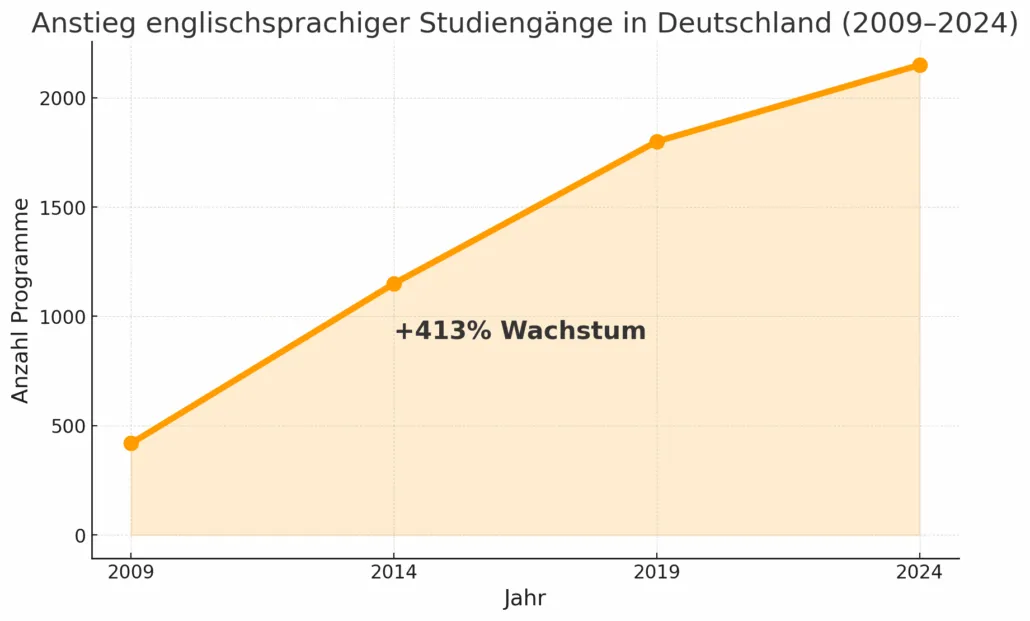
Fig. 1: Growth of English-taught programmes in Germany (2009–2024)
Source: Wissenschaft weltoffen – DAAD & DZHW, data as of 2024. Retrieved: 19 November 2025. URL: www.wissenschaft-weltoffen.de
Why this matters: the world of work is changing
These numbers make one thing clear: English-taught programmes are no longer a niche. Universities are responding to a shift that many of us already feel in our day-to-day lives – the working world is becoming more international, more digital, and more connected.
And yet many students and young professionals rightly ask: "Why should I study in English if I live in Germany and plan to stay here?" A completely fair question. There are plenty of excellent German-language programmes and great career opportunities right here at home. But that's exactly why it's worth taking a closer look.
In this article, you'll find out why studying in English can be a real advantage for you – even if you live in Germany and plan to stay.
Why study in English in Germany?
The reasons for choosing an English-taught programme today have little to do with wanting to move abroad. They reflect how modern companies, international industries, and today's business world actually work.
The working world is changing – it's becoming more digital, more connected, and more international. That's exactly why an English-taught degree in Germany offers real added value. But what does that mean for you, concretely?
7 advantages of studying in English in Germany
Here are the 7 key advantages an English-taught degree brings for your career and personal development.
1. English is the new business standard
English is no longer just a foreign language – it's become the working language and professional lingua franca of many companies, including in Germany. Meetings, project coordination, presentations, software interfaces, reports, client communication: a huge amount of this happens in English as a matter of course.
An English-taught degree gives you exactly the routine and confidence that modern employers expect. You learn to communicate fluently in English, present ideas clearly, and navigate professional situations with ease. And most importantly: you actually start doing it. Many people wait because they think their English "isn't good enough yet" – but you grow by doing. Business English also has a surprisingly limited vocabulary that repeats itself constantly, so just go for it. That's the real key to success.
2. Better career prospects – even in Germany
If English is today's business standard, that directly shapes what employers expect from you – both in the application process and on the job. More and more German companies, including right here in the TechnologieRegion Karlsruhe, work in internationally connected environments, serve clients and partners from multiple countries, and build multinational teams. Whether it's a small business, a mid-sized company, or a large corporation: global projects are the norm in almost every industry today.
With an English-language degree, you signal clearly to employers that you're confident in the language, comfortable in international structures, and bring exactly the skills modern companies are looking for.
That gives you a real edge in the application process – right here in Germany.
3. Access to top salaries
English proficiency doesn't just improve your career prospects – it has a measurable impact on your salary. A study published in the Labour Economics Journal (Hahm & Gazzola, 2022) based on data from around 2,000 participants found that employees with strong English skills in Germany earn on average around 13% more than colleagues without that language confidence.
Sounds modest at first – but it adds up. In Fig. 2 we ran a quick example: on a net monthly salary of €2,500, 13% means €325 extra per month. Over a full year, that's €3,900 more – more than a 13th monthly salary, just from English. That's easily enough to fund an extra holiday or finally start that hobby you've been putting off.
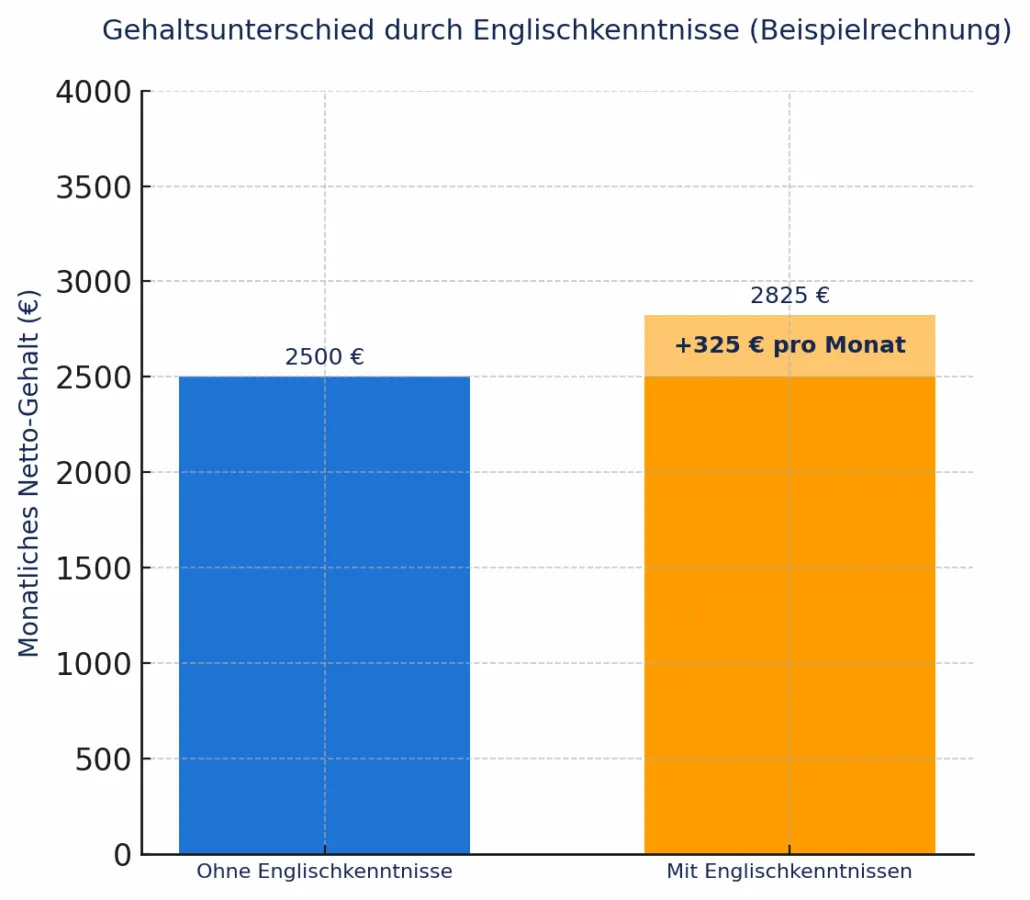
Fig. 2: Salary difference through English skills (example calculation)
Source: Own illustration, 2025
Of course this is just an example – but one of the main reasons English leads to higher salaries is that it opens doors to jobs at large corporations and international companies, which are known to pay significantly more. Higher-level roles in project management or general management also require English communication, international coordination, and working with clients and partners across borders. If you're aiming for an MBA in General Management and a leadership position, an English-taught MBA in General Management gives you not just the leadership skills but also the language competence those roles demand – making you far more attractive for top-paying leadership positions than a German-only MBA would.
And if you want to go one step further and pursue a part-time doctorate – which can give you an additional salary boost – English will be unavoidable there too. As an external doctoral candidate, academic language is almost always English. That means all papers, publications, and the dissertation itself are written in English, and the corresponding language skills are expected.
4. International perspectives & a global mindset
An English-taught degree automatically puts you in contact with people from very different countries, which massively expands your professional network.
But it's not just about building international connections – you also gain insights into international markets, different ways of working, and new ways of thinking through discussions, projects, and group work. Perspectives you might never have encountered otherwise.
These experiences sharpen your global understanding and connect directly to what modern companies expect: the ability to think, communicate, and collaborate across borders. Those who experience this during their studies move far more confidently in international projects later on.
5. Understanding technical terms in their original language
As we've already seen, English is the working and professional language of modern business – especially in fields that are highly relevant today and will only become more so: AI, Data Science, and Management.
In all of these areas, English terminology isn't just common – it's the global standard. Terms like Machine Learning, Neural Networks, Change Management, Leadership Development, Stakeholder Alignment, Strategic Decision-Making, or Operational Excellence show just how deeply English shapes modern professional language.
Learning these terms directly in English – for example in the English-taught Master's in Data Science & AI or an MBA – gives you several advantages at once. You understand specialist literature faster and more precisely, you can competently use globally relevant tools, you communicate on equal footing with international teams, and you come across as more confident and professional in meetings and projects.
In short: learning your field's language directly in English makes you faster, more confident, and better equipped in your day-to-day work.
6. More confidence & personal growth
An English-taught degree doesn't just build the professional skills you need to succeed – it also challenges you personally and helps you grow. When presentations, discussions, and written assignments suddenly happen in English, you automatically step outside your comfort zone.
The effect is real: you become more self-assured and braver as you successfully tackle challenges, you carry yourself with more confidence, and you build trust in your own abilities. Add to that the exchange with people from different countries and backgrounds, and you develop greater openness, empathy, and an expanded mindset – one that strengthens you both professionally and personally.
All of these factors – leaving your comfort zone, personal wins, and new perspectives – move you forward in your career and your life in the long run.

7. Future-proofing in a global, AI-driven world of work
As we've seen throughout this article, English – especially in modern future-oriented fields – has become the central working language. This is particularly true for AI, tech, Data Science, and digital innovation. These areas are growing fast and will remain decisive for years to come.
If you want to work in a future-proof field like Data Science, AI, or Digital Business, an English-taught degree – such as an English-taught Master's in Data Science & AI – gives you an enormous advantage. You learn directly in the language in which new methods are developed, global trends are communicated, and innovation happens – keeping you professionally sharp and up to date.
Quick check: is an English-taught degree right for you?
An English-taught degree – for example a Master's or MBA – could be exactly right for you if you:
- want to stay in Germany but work globally
- want to come across as modern, confident, and professional
- want to build a career in an international company
- want to move up in management, digital business, or tech
- already work with English tools or terminology
- want to communicate with more confidence
- are looking for a degree that develops you professionally and personally
- want to work in a future-proof field
If several of these resonate with you: an English-taught degree will noticeably move your path forward.
English-taught degree = your career upgrade
The fact is: without English, the modern working world gets tough. Whether it's AI, tech, management, or international projects – business today runs in English as a matter of course. An English-taught degree gives you exactly the skills you need to navigate this reality with confidence and succeed.
You'll be more assured in your communication, understand specialist language in the original, be able to think globally, and automatically carry yourself more professionally.
That has a direct impact on your career, your network, and ultimately your salary.
So if you want a real upgrade for your future and your career, studying in English is one of the fastest ways to get there – even if you have no plans to leave Germany.