Degree programmes of the future: what really matters in education today

Christine Stamatis
Founder & Managing Director
10. Februar 2019
The digital knowledge revolution – and what it means for all of us
Knowledge never sleeps.
In 2018, around 13 million text messages were sent worldwide every minute, 4.3 million videos were watched on YouTube, and 750,000 songs were streamed on Spotify – all per minute.
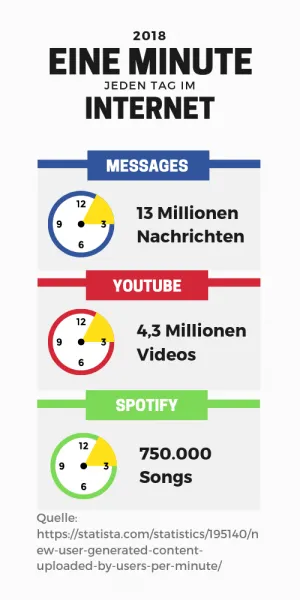
These numbers show the sheer scale at which data is constantly being created, consumed, and distributed. And this doesn't just apply to consumer content – it translates directly to the globally available pool of knowledge.
It's not just that we're accumulating more and more knowledge. It's also becoming outdated faster. Research suggests that in some fields, the specialist knowledge taught in a typical Bachelor's degree can be obsolete within just five years.
Students are often trained to dive straight into learning predefined content – before they've even mastered learning itself as a skill. Like any other skill, learning needs to be practised to improve.
And the attitude you bring to learning matters more than what you've already learned.
What does this mean for education?
An academic education based purely on transmitting factual knowledge is outdated – and enriches neither students nor lecturers in the long run.
What should take centre stage instead is how we engage with new information: how we evaluate it, contextualise it, and make sense of it. Distinguishing what matters from what doesn't, thinking critically (spotting "fake news", for example), and recognising bigger patterns – these are the mental tools of the future.
And they need to be learned.
New goals and learning models are needed
Leading education experts are already calling for a new school model – one that, instead of traditional classroom instruction, focuses on the personal competencies most important for professional success: the so-called four C's: Critical Thinking, Creativity, Collaboration, Communication.
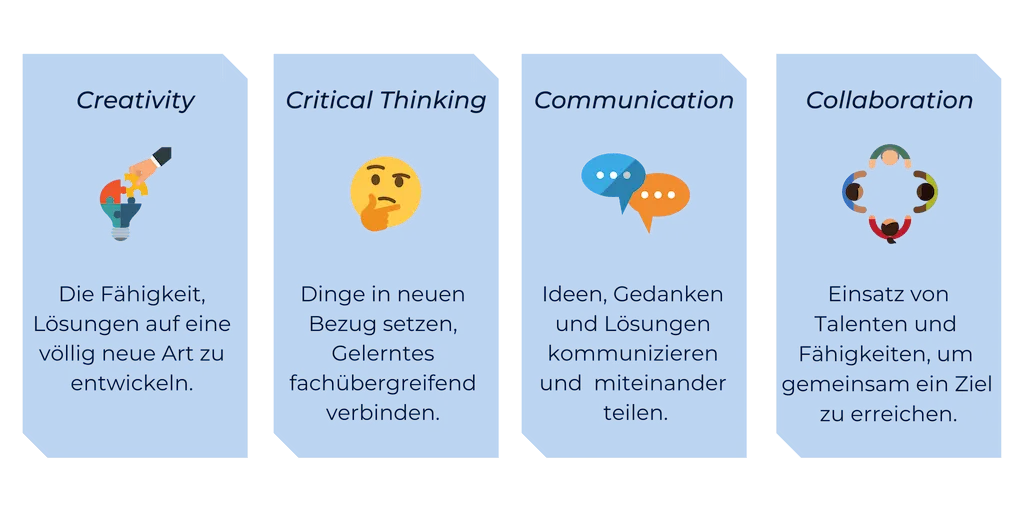
These competencies are highly relevant in study, in almost every profession, and in personal life – and they've proven to prepare people for a career far better than factual knowledge alone. Learning in small groups has emerged as particularly effective for this kind of approach.
Unfortunately, most schools and universities are still far from this model. One challenge is that a large proportion of teachers have only ever known and practised traditional frontal teaching themselves.
Simply introducing modern media and technology doesn't solve this fundamental problem on its own.
Interdisciplinary learning
Of course, specialist knowledge can't be replaced by developing broader competencies. But change is visible here too. The demands of modern academic professions increasingly require knowledge not just from a single domain, but from multiple fields combined (e.g. business and computer science). Interdisciplinarily trained professionals are therefore particularly sought after, as they offer companies a decisive added value.
Traditionally, however, universities are divided by faculties and departments. This division inevitably shapes the thinking of students, teachers, and staff alike – creating mental barriers and making it harder to acquire and exchange knowledge across disciplines.
Pigeonhole thinking blocks creativity.
One solution is building more flexible organisational structures at universities – ones that bring together teachers, courses, and projects across disciplines.
Adaptive learning – more effectiveness and joy in learning
The traditional learning model still too often relies on a one-size-fits-all approach. All students receive the same content in the same format at the same pace, as determined by the lecturer and the curriculum.
In extreme cases, this makes learning harder for part of the group while others are bored.
Adaptive learning offers a way to counter this.
Current developments in Artificial Intelligence (AI) offer promising approaches for creating individual learning profiles based on collected data. In principle, these make it possible to respond to different learning types and knowledge levels individually – for example by creating targeted learning and development plans.
AI-powered adaptive learning is still in its early stages, and very few institutions have the technical and human resources needed for it.
But being aware of the importance of individual learning development – and using learning concepts that focus on the individual rather than the mass – can already lead to a significant improvement in learning outcomes and higher student satisfaction today.
Conclusion
Broader competencies are becoming increasingly important and need to be taught alongside specialist knowledge using appropriate learning models. Combining interdisciplinary knowledge domains additionally qualifies graduates for their careers. Individual learning concepts promote motivation and academic success.
But most importantly: it's about how we mentally approach ever-new challenges, how we can acquire new knowledge easily and with enjoyment when we need it, and whether we're ready to keep developing ourselves.
We cannot build the future for our youth—but we can build our youth for the future.
Franklin D. Roosevelt