The future is digital: Why a technology degree redefines your career path

Christine Stamatis
Founder & Managing Director
5. Dezember 2023

What to expect from a technology degree
In today's fast-moving landscape of digitalisation and technological change, a degree in technology is your key to new career opportunities. But have you ever wondered exactly how a technology degree sets you up for a world that never stops evolving – and how it shapes not just your career, but your future?
Choosing a tech-focused programme – like the Digital Games Business Bachelor or the Digital Management Master – can be a smart move for several reasons. Especially in today's fast-paced, technology-driven world, these degrees can make all the difference.
Here are 5 reasons why a technology-oriented degree makes sense.
Advantages of a technology degree:
- High demand in the job market: Technology industries are in constant development and expansion, which means there's strong demand for qualified professionals in areas like IT, software development, data analysis, and cybersecurity. There's often a gap between the skills companies need and what's available in the market. Tech programmes help close that gap by equipping graduates with the right knowledge and capabilities.
- Innovative and future-oriented career paths: Tech degrees give you access to some of the most innovative and forward-looking professional fields. Graduates can work at the cutting edge of technological progress – in areas like Artificial Intelligence, Machine Learning, Big Data, and other emerging technologies.
- Strong earning potential: Technology roles are consistently among the best-paid jobs, which makes them attractive to many students. The combination of high demand and specialised skills often leads to above-average salaries.
- Career flexibility: Technical skills are in demand in virtually every industry. Graduates of tech programmes can work across a wide range of sectors – from traditional IT companies to healthcare, financial services, and education.
- Adaptability through technology education: Technology programmes often teach skills that are applicable in many different contexts, which builds adaptability in a rapidly changing world of work.
So which key competencies are actually relevant for the future of work?
Key competencies for the flexible world of work:
- Data analysis and management: Skills in handling large datasets (Big Data) and analysing them are particularly valuable. They're used in marketing, financial analysis, healthcare, and research to identify patterns, make predictions, and support decision-making.
- Cybersecurity: Knowledge of IT security is in demand wherever data is stored and processed – which covers almost every sector. Cybersecurity skills aren't just about protecting sensitive information; they also open up the exciting world of ethical hacking.
- Networking and cloud computing: Skills in these areas are important for implementing and maintaining IT infrastructure in companies. Cloud technology is used across industries to store data and facilitate collaboration.
- Artificial Intelligence (AI) and Machine Learning (ML): These technologies are applied in areas like autonomous vehicles, personalised medicine, automated customer service systems, and intelligent data analysis. AI and ML fundamentally affect almost every area of life.
- User Experience (UX) and web design: Knowledge of designing user-friendly websites and applications is relevant in almost every sector where digital products play a role – including the games industry.
- Project management and agile methods: These skills are applicable across industries and help with the efficient planning, organisation, and execution of projects – especially in technology-oriented teams.
- Programming and software development: Basic knowledge of programming languages like Python, Java, or C++ is in demand in many fields. Not a programmer? Even getting familiar with logical thinking (e.g. if-then relationships) builds critical thinking and problem-solving skills that are valuable across many professional contexts.
Comparing starting salaries
Graduates in technical fields typically start with higher salaries than those in the humanities, since technical skills are currently in higher demand. While business graduates can also achieve good starting salaries, tech roles often offer faster salary growth.
Figure 1 shows the current average gross starting salary for university graduates by field of study in Germany. Business informatics and computer science are firmly in the top 5 highest-paying degree programmes.
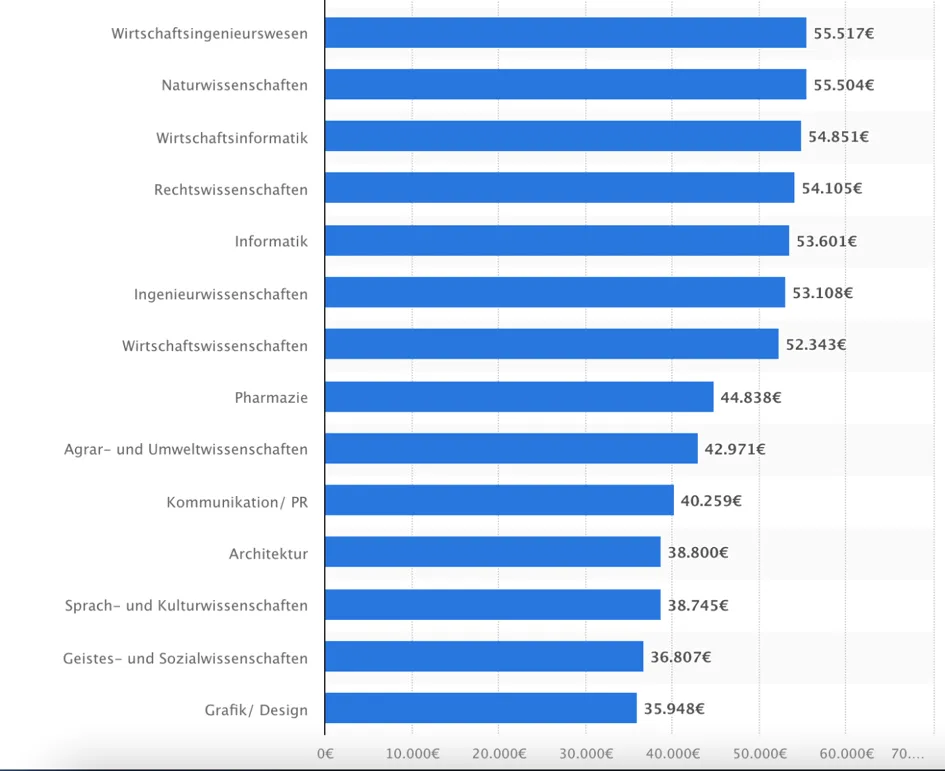
Figure 1: Current average gross starting salary for university graduates
Source: Statista
A technology degree is a gateway to diverse and future-oriented careers in a technology-driven world. With high demand in the job market and the ability to work across many industries, it offers flexibility and very attractive earning potential.
Want to find out more about technology degree programmes? Come along to a GoVersity info session – every Thursday from 6:00–6:30 pm. Register here – no obligation. We'd love to meet you!
Explore the Data Science & AI Master's